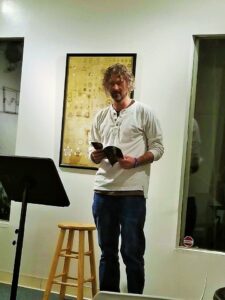
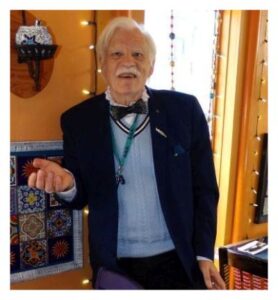
Debashish is a machine learning scientist, who has been published in literary magazines several
times across the globe, including Poetry Life & Times, where he was interviewed twice.
He is currently contending with a severe writer’s block spanning a decade, when he has hardly
produced any publishable content. He is also losing emotional connection with his own work
gradually, and spends more time to edit/tighten his old poems than creating any new content.
Poet
The Kingdom of Chaos Poems by Scott Thomas Outlar
Silver Primroses & Golden Strigiformes Planted by the Curb
Carrying your own
dead body
back to its grave
in a dream
then happening upon
an expired owl
stricken & smashed
in the street
Ominous signs
along Five Forks Trickum
birth into
patterns of indigo
& scarlet wildflowers
Spirit animals
taking a dive
before rush hour fevers
commence
learn to sip
from the parched throat
of roadkill brunch
eating the
organs
of our own
totem
Stomach Lining
I came to eat the lies you coin
and serve them back half bitter
across the divide of tables turned
I didn’t ask for this evil eye
it was forced down my throat from the jump
been begging for a bulimic leap ever since
Spells of the Stoic Pewter
& I will
set you (free) here
to be made safe by the wizard / window
(fly, birdie)
black obsidian
gray of mind & beard
wise & dangerous
streaked/laced down the middle
balanced of accord
(harmony
& likewise
rhythm)
you are the melody of a soft glow
Lament of Prey
Hello to all the hawks
who have yet to have their fill,
& the vultures, too,
waiting for what’s left over.
Spoiled minds & spoiled hearts
lead to spoiled guts,
but it seems to be
that’s what nature intended
in this twisted realm
of divided time & space.
Dog eat dog
isn’t even the worst part;
it’s flesh unto flesh
in the fire.
Goodbye to all the dreams
that forgot how to conquer,
& the visions still
yet to crystallize in cancer.
Rotten bones & rotten marrow
flow in rotten rivers,
but that’s the taste
acidic blood delivers
when signs of sickness
flash neon & electric in the night.
Tail chase tail
isn’t the end of the story;
it’s a snake that never sheds
the fade to black.
Kingdom of Chaos
We don’t want your money,
just your soul
on a silver platter
served to order
for our warm feast
while we spit out your raw famine.
We don’t want your respect,
just your energy and time,
just your mind
numbed
to the frequency
of propagandized pestilence.
We don’t want your love,
just your heart
bled dry
as every vein
withers in the winter wind
while our chalice remains
ever full to the point of overflowing.
We don’t want your vote,
just your faith
that such a course of action
can actually influence
the order in which our puppets
dance to a song of chaos
upon the public stage.
We don’t want your salute,
just your obedience,
just your hands
kept where we can see them
while your feet continue marching
to the drumbeat of our wars.
We don’t want your laws,
just your land,
just your culture,
just your customs,
just your heritage,
just your traditions
snuffed out
beneath the global kingdom
collectivized
at our command.

Scott Thomas Outlar is originally from Atlanta, Georgia. He now lives and writes in Frederick, Maryland. His work has been nominated multiple times for both the Pushcart Prize and Best of the Net. He guest-edited the Hope Anthology of Poetry from CultureCult Press as well as the 2019-2023 Western Voices editions of Setu Mag. He is the author of seven books, including Songs of a Dissident (2015), Abstract Visions of Light (2018), Of Sand and Sugar (2019), and Evermore (2021 – written with co-author Mihaela Melnic). Selections of his poetry have been translated and published in 14 languages. He has been a weekly contributor at Dissident Voice for the past nine years. More about Outlar’s work can be found at 17numa.com
Mapplethorpe, Lethe, via crucis, Poems by Krystle Eilen
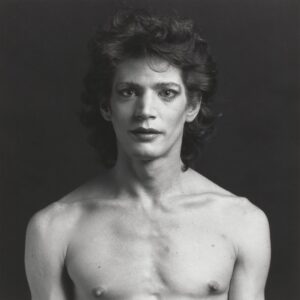
Mapplethorpe
after Robert Mapplethorpe’s Self Portrait, 1980
half youthful, half emaciated,
he reflects the epicene
and the languishing.
his head is all shock and flurry;
his mouth a toothless brevity.
half Madonna, half Antinous,
he reflects a decadent flower
both wilting and transcendent.
his eyes suggest a having seen,
two eternally startled interims.
a princely pauper
whose aspect reflects that of
a parched orchid culled
too soon.
published in Hive Avenue Literary Journal
Lethe
i am a winged thing flailing,
driven into my bovine body, and
back into my savage infant soul.
in the beginning, nature
conceived another deadweight,
and i find myself stillborn.
i am forever waiting to
open my welkin eyes
and outwit the brute.
i want the earth wrested from me;
i want no longer to acquiesce to
the stranglehold of gravity.
i am forever looking forward to
eclipsing the round
seared by fantasy.
published in Hive Avenue Literary Journal
via crucis
i.
to behold paradise
god must be heaved up,—
for to become seraph
is to gouge the eye out.
ii.
always at one remove
is to be found divinity,
otherwise effaced
by twin identity.
iii.
riven apart
by mimetic sparagmos,
man is condemned
to die on the cross.
iv.
to shed the serpent’s skin
is but to reiterate its meander,
for conquest precedes
the bind of surrender.
Krystle Eilen is a 22-year-old poet who is currently attending university. Her works have been featured in Dipity Literary Magazine, BlazeVOX, and Hive Avenue Literary Journal, and are soon to be published in The Orchards Poetry Journal and Young Ravens Literary Review. During her spare time, she enjoys reading and making art.
Poetry. Five Sonnets from Richard Vallance
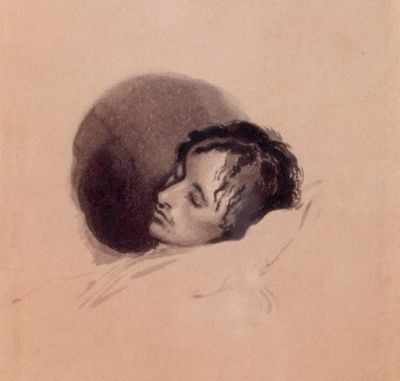
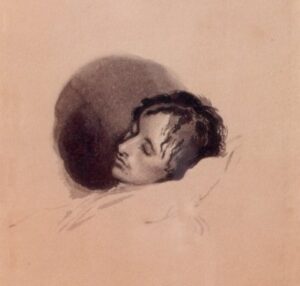
Image: Keats on his Deathbed. Artist Joseph Severn.
I saw a sparrow for Emily Dickinson (1830-1886) I saw a sparrow in the snow, who hovered by a boy nearby; It swayed a little to and fro, small wonders they, small wonder why. The boy, the flautist all alone amidst the misty spruce around where snow was so serenely sown, played tremolo the fairest sound. The little sparrow lingered there, the boy, the flautist of her soul; Iʾll never tell wherever where they warbled to attentive snow. If anyone found a place so rare would there have been anyone there? I found a soldier all too fair for all the fallen in the war in the Ukraine I found a soldier oh so fair, an apparition in the vale; oh there were reasons for despair to see a face so ghastly pale. I listened for the faintest breath, a hint of colour on his lips, but was confronted with a death the setting sun could not eclipse. I lingered there and wept a while; the poppies seemed to mourn him too. I heard a thunder from a mile, where clouds assumed an ashen hew. A wounded straggler passed me by; oh how I feared he too would die! Listen oh listen! Listen oh listen! ... the tanager trills! ... he arrays the blue spruce with feathers as light as gossamer fronds the forest just thrills to veil in his voice lost in the moonlight! However whoever alights on this place may find my tanagerʾs warbled refrains leave en passant over teal leaves the trace of whose emotions? ... whose tremolo strains? Is this the rare moment April declares the seasonʾs rife for my chanson, the song the sunrise with cirrus so silently shares? ... only I, tanager, knew all along. Were I the sole tanager of your desmesne, well, Iʾd be voiced in your glass of champagne! The poetry of KeatsJohn Keats on his death bed, by Joseph Severn For W.T. The poetry of Keats is replete with death: an owl more ominous than a blue moon had hooted sans merci til his final breath, as he passed away in a fitful swoon before the sky was flush with fading blue, before ambrosial roses withered, strewn before the autumn breeze all too wanly blew to the long-lost score of some mournful tune. As if the nightingale could warble love might I implore you if her song recalls as quietly as would a cooing dove our barren prayers before the wailing walls; I too recall my all too cherished friend, who wasted away to an ill-timed end. Huskies Mush! I'll slide my sled from the frozen-in stream towards the lake where snow rolls down me, blind; me sled is all wedged in by me husky team, whose hunger drives em wild with single mind. They lunge, they'll lunge in vain. What? Can't break out. Me lungs could bust with frost I'se just gulped in. Me lips all blue, I'se stiff with icy doubt. Me dogs, all panicked, tangled, yelp chagrin; I grits me teeth, jerk hard the sled, and hear that cursed ice cave! “Come on! Bust loose!”, I yell, “Mush!”, snaps the whip! Aw, we'se gotta break clear! “We'se broken out!” Them huskies dash like hell. Did we break loose? Those snapped up rapids yawn behind us as we vanish, good as gone.
Richard Vallance was a frequent contributor to the earlier issues of Poetry Life & Times, from 2001-2008, where several of his sonnets and rhymed poems appeared, and where he was the resident poetry critic of the Vallance Review, which featured reviews of sonnets and rhymed verse by some of the world’s most famous historical sonneteers and poets.
Richard Vallance has also been featured from time to time in more recent issues of Poetry Life & Times, Poetry Life and Times (artvilla.com), from 2012-2018.
He has also been published in several other international venues, among others: Decanto Poetry Magazine/Anthology (Sara Russell, ed.) – no longer in publication The Deronda Review, Neo/Victorian Cochlea, The Deronda Review – Home, Sonnetto Poesia ISSN 1705-4524 (25 quarterly issues) SEE: Sonnetto poesia. | Bibliothèque et Archives Canada / Library and Archives Canada (worldcat.org)
Richard Vallance is also the Editor of a multilingual anthology of sonnets. The Phoenix Rising from the Ashes = Le Phenix Renaissant de Ses Cendres – Anthology of Sonnets of the Early Third Millennium = Anthologie de Sonnets a: Vallance, Editor-In-Chief Richard: 9781460217016: Books – Amazon.ca
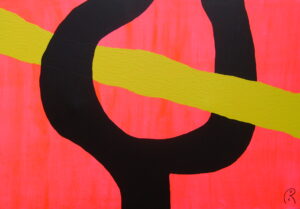
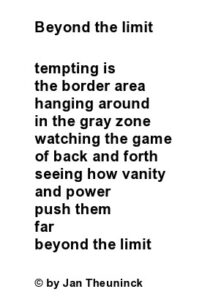
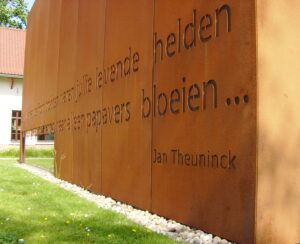
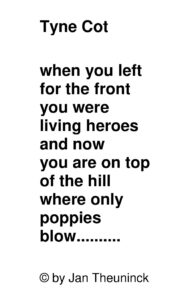
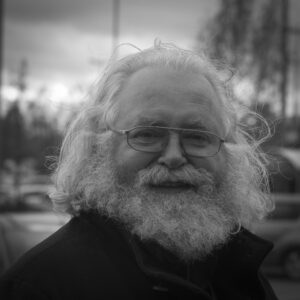
Beyond the Limit & Tyne Cot. Ekphrastic Poems by Jan Theuninck
The Hearthside Poems by Michael R. Burch
Something
for the children of the Holocaust and the Nakba
Something inescapable is lost—
lost like a pale vapor curling up into shafts of moonlight,
vanishing in a gust of wind toward an expanse of stars
immeasurable and void.
Something uncapturable is gone—
gone with the spent leaves and illuminations of autumn,
scattered into a haze with the faint rustle of parched grass
and remembrance.
Something unforgettable is past—
blown from a glimmer into nothingness, or less,
which finality has swept into a corner ... where it lies
in dust and cobwebs and silence.
Styx
Black waters—deep and dark and still.
All men have passed this way, or will.
Spring Was Delayed
Winter came early:
the driving snows,
the delicate frosts
that crystallize
all we forget
or refuse to know,
all we regret
that makes us wise.
Spring was delayed:
the nubile rose,
the tentative sun,
the wind’s soft sighs,
all we omit
or refuse to show,
whatever we shield
behind guarded eyes.
Infinity
for Beth
Have you tasted the bitterness of tears of despair?
Have you watched the sun sink through such pale, balmless air
that your soul sought its shell like a crab on a beach,
then scuttled inside to be safe, out of reach?
Might I lift you tonight from earth’s wreckage and damage
on these waves gently rising to pay the moon homage?
Or better, perhaps, let me say that I, too,
have dreamed of infinity . . . windswept and blue.
Hearthside
“When you are old and grey and full of sleep...” — W. B. Yeats
For all that we professed of love, we knew
this night would come, that we would bend alone
to tend wan fires’ dimming bars—the moan
of wind cruel as the Trumpet, gelid dew
an eerie presence on encrusted logs
we hoard like jewels, embrittled so ourselves.
The books that line these close, familiar shelves
loom down like dreary chaperones. Wild dogs,
too old for mates, cringe furtive in the park,
as, toothless now, I frame this parchment kiss.
I do not know the words for easy bliss
and so my shriveled fingers clutch this stark,
long-unenamored pen and will it: Move.
I loved you more than words, so let words prove.
Love Has a Southern Flavor
Love has a Southern flavor: honeydew,
ripe cantaloupe, the honeysuckle’s spout
we tilt to basking faces to breathe out
the ordinary, and inhale perfume ...
Love’s Dixieland-rambunctious: tangled vines,
wild clematis, the gold-brocaded leaves
that will not keep their order in the trees,
unmentionables that peek from dancing lines ...
Love cannot be contained, like Southern nights:
the constellations’ dying mysteries,
the fireflies that hum to light, each tree’s
resplendent autumn cape, a genteel sight ...
Love also is as wild, as sprawling-sweet,
as decadent as the wet leaves at our feet.
Remembering Not to Call
a villanelle permitting mourning, for my mother, Christine Ena Burch
The hardest thing of all,
after telling her everything,
is remembering not to call.
Now the phone hanging on the wall
will never announce her ring:
the hardest thing of all
for children, however tall.
And the hardest thing this spring
will be remembering not to call
the one who was everything.
That the songbirds will nevermore sing
is the hardest thing of all
for those who once listened, in thrall,
and welcomed the message they bring,
since they won’t remember to call.
And the hardest thing this fall
will be a number with no one to ring.
No, the hardest thing of all
is remembering not to call.
Sunset
for my grandfather, George Edwin Hurt Sr.
Between the prophecies of morning
and twilight’s revelations of wonder,
the sky is ripped asunder.
The moon lurks in the clouds,
waiting, as if to plunder
the dusk of its lilac iridescence,
and in the bright-tentacled sunset
we imagine a presence
full of the fury of lost innocence.
What we find within strange whorls of drifting flame,
brief patterns mauling winds deform and maim,
we recognize at once, but cannot name.

Michael R. Burch is an American poet who lives in Nashville, Tennessee with his wife Beth and two incredibly spoiled puppies. He has over 6,000 publications, including poems that have gone viral. His poems, translations, essays, articles, letters, epigrams, jokes and puns have been published by TIME, USA Today, BBC Radio 3, Writer’s Digest–The Year’s Best Writing and hundreds of literary journals. His poetry has been translated into 14 languages, taught in high schools and colleges, and set to music by 23 composers, including two potential operas if the money ever materializes. He also edits www.thehypertexts.com, has served as editor of international poetry and translations for Better Than Starbucks, is on the board of Borderless Journal, an international literary journal, and has judged a number of poetry contests over the years.

Evergreen into Ivory White Poems by Julia Webster
Tread Softly
Tread softly for the night is but
a prelude to the day
And all that lives must die
For thus it is as we've heard say
So many times before.
Before? the end of the beginning
Which itself is only spinning to Infinity
Divinity is but a name for good thought
Transferred into deeds
Where one man counts the cost
The other's praying for his needs
Stop!..A thought
Listen!...A bird is singing somewhere
in the Universe.
Poor thoughts, poor empty thoughts.
How can I say ' I love you?'
What's in a word?
Just frailty.
One, two ,three, four, five ,six ,seven
All good people go to Heaven
But I think otherwise and I'd advise that
You do too
Wouldn't you advise someone that
Hell's by far a better place
And that a misplaced feeling of disgrace is relatively unimportant
Oughtn't one to think so?
No I suppose you wouldn't, couldn't
I like to think a little differently
Not follow in the crowd , eh?
Tread softly, you may say,
Have it your way.
A devil, black and smoky,
Breathing fumes of concentrated orange juice through cold-pudding nostrils
What's wrong with that?
Don't tell me you don't like him
None of that!
I suppose you'd paint a better?
Fetter him in garlic, would you
Could you?
Tread softly
For the night has come and dying is
Out of tune
And all the people on the earth are Gazing at the moon
For soon her light will out
And shouts of anguish then will spill
the air
And everywhere will be a place too small
And anywhere will be the devil's fool
And stars will burst and thirst
for more good deeds to fill up History
And soft bright eyes will dim
And then the earth will lose its spin
And fighting chaos raging for a decade
Will streak the skies with noble deeds
And stars will burst and thirst for More good deeds to fill up History
And then....only Time
Not space but Time
Running, walking ,speeding
Slowing ,
Straight, bent, Lent.
Time without space
And nothing more.
A drop of sun upon a leaf
Warm rays spraying silver on the seas
A fan of light beating colours into flowers
And hours upon hours upon hours..
Tread softly....tread softly...
Flight of the Dove
The tree stands in the lonely field.
It is raining in sleep- filled rivers.
Do not hate, do not love.
beyond hope or caring, sleep or sloth
Dreams deride the thing which is
Whole world's subside and we,
Who think we know what suffering is
Cannot abide the murmuring of the dove.
We who do not hate, we who do not love.
For us the barren fields are soaked
in blood.
Send up the cry! God is dead!
Only beware the fleeing of the dove.
Have you seen her?
Flashing blue across the river?
Did you call out to her?
Splash of film over the river.
Catching sight of her wings of taut gold
Did your heart of a sudden grow old?
As she sliced the sun into pale- white ivory stalks
By the water's edge, disrupting the
moor-hen's song,
Belong, belong! belong, Belong!
But what are you doing here,old man
Fouling the greenways?
Mouth of pomegranate, stench of
tears gone sour,
How could you have tasted the Forbidden fruit
At this ungodlike hour?
You were cast in too strange a mould
A million years of shadow have Trespassed behind your eyes
How could you taste the light
of your eyes?
Rains you heed not, nor the wind's outrage,
But poach at ease beside the blood-lit streams
Not hating, not loving
But tell me, what will you do
When she comes, robed in mist?
At the first hint of dawn,
Will you see her, even in dreams?
Will you stay silent as she drops
To her pale death in the foam
Jagged rock of white mist, Plummeting down through
the air's crystal streams
Lost to the sunrise
Staining the day with new gold
As the sun's rivers melt her through
Will she touch you?
You who are so old?
Will you reach out to feel that Warm rush of feathers
Blue-green-scarlet-gold?
Or are you too old, too old?
As the waters reflect back her causeless song
Will you trace those pyramids of
light
Treading sapphire rings
into the mud?
Ode to a Drug Addict
The great scape of Heaven
Is tortured with images of Death
And the night sky.
Owls swoop in the twilight world
Where Keats went mad
For Beauty 's treacherous eye.
Ode to a fool
Transfixed by the painting
Of some great pig of a man
Eating a fly.
Tempestuous nights and dawns of
Eclipses
Fighting the otherwhere and the
Why.
I
Screech at you from the rooftops
Over the bridge, driven wild
Inside my head
Hammer the bed into white sheets
Grasp cold on
Nothing
Outstare the stars to white lead.
And running,
Hand you the piece of dust
From which I fled.
Evergreen into Ivory white
Evergreen into ivory white
The curlew calls
The morbid manufacturers of day
Attend the passing funeral
Of those who decay
Slowly with time.
The bird rustles in the hedgerow
Hear its mating call
At close of day
the flight of swallows return
No matter where.
The passing shepherd summons the sheepdog
The daffodils burst out in gold
My lover's out there in the cold
The short mist comes
The gap between heaven and earth
And all obscurity
No greater love than this
Will
You
Grant
Me
A
Short
Space
For
Breath
The galleon ship enshrouded in mist
White walls surround the drowned sailor
Shipwrecked
In white water
On the turf of dreams
The bird flying calls
The seamen look up
It is not a white albatross
It is I turning about
Into this white pool
The shoreline crinkles into powder
Tiny and remote
Flying high, the day recedes
Into this ivory-white

Julia Webster studied English & Drama at Exeter University then later studied Integrated Health Sciences at Westminster. Her first play written in 1972 entitled “The Object of the Game” was performed at The Little Theatre, Barbican , Plymouth and was likened by the well known Harvey Crane critic of the South West to works by Pinter and Ionesco. She began writing puppet plays for children and performed at various Albion fairs throughout the U.K. and was selected to attend The Children’s Festival in Austria by Arabella Churchill. She also wrote poetry since her teens and has composed many songs for voice guitar, violin and piano accompaniment which have been performed in various venues across the U.K. and also in India. In 1979 she met her teacher Chogyal Namkhai Norbu Rimpoche and has been a student of his and Dzogchen teachings since then. She currently lives in West London with her family and teaches piano and also practices cranio sacral therapy.
Teetering Toward Sattva & Further Poems by Kalpita Pathak
Teetering Toward Sattva My friend’s mother would tell him, I created you and I can destroy you, as though, like Parvati with Ganesh, she had literally made him from a mixture of earth and her perspiration, brought him to life with her breath. Śaivasampradāyaḥ believe Shiva is the creator, preserver, and destroyer of the cosmos. Does that mean mothers are his avatāra and children their miniature multiverses? I wouldn’t know. I’m not a mother. Mine may have been a god to me when I was little (it’s likely she was) but I remember her as my universe. One I destroyed over and over with the choices I made, huddled and weeping and bereft, my days-old sweat a blend of scotch and cigarettes and dirt from the alleys where I crouched for decades. Now those years have passed and so has she. Neither creator nor destroyer, she preserved her dreams for/in me and I live them with her hands, callused, dry-darkened at the knuckles, soft, cool. They wash away the grime so I can live for today. So I can live for us both. So I can live. Anteyesti to Anay Your body burns as your mother weeps her son into a letter. I read it, edges fluttering in the summer wind like wings, like the ashes we scatter in the canyon’s river. She asks why you wanted to melt into memory, fleeting desert snow beneath the sun of our hot grief. And in that brutal light, she begs for rain to swoop down and flood her cracked earth. (… As We Know It) Reset: Kritayuga Begins Again When the apocalypse comes what becomes of the astronaut who floats in the space station and sees the sun as it really is – a silvery white flare, incandescent as fireworks arching over our greening blue Earth?
Kalpita Pathak is an autistic poet, novelist, and advocate with a passion for research and sensory-rich details. Her work tends to explore the perseverance of hope in a sometimes despairing world, with a little dark humor and magic added to the mix. She received the James Michener Fellowship for her MFA in creative writing and has taught at both the college level and in school programs for kids from three to eighteen. She has recently been published in Mediterranean Poetry.